The operational problem
Prospect research, campaign activity, messages, replies, and next actions were split across tools and people, making duplicated outreach, missed follow-up, weak accountability, and lost learning more likely.
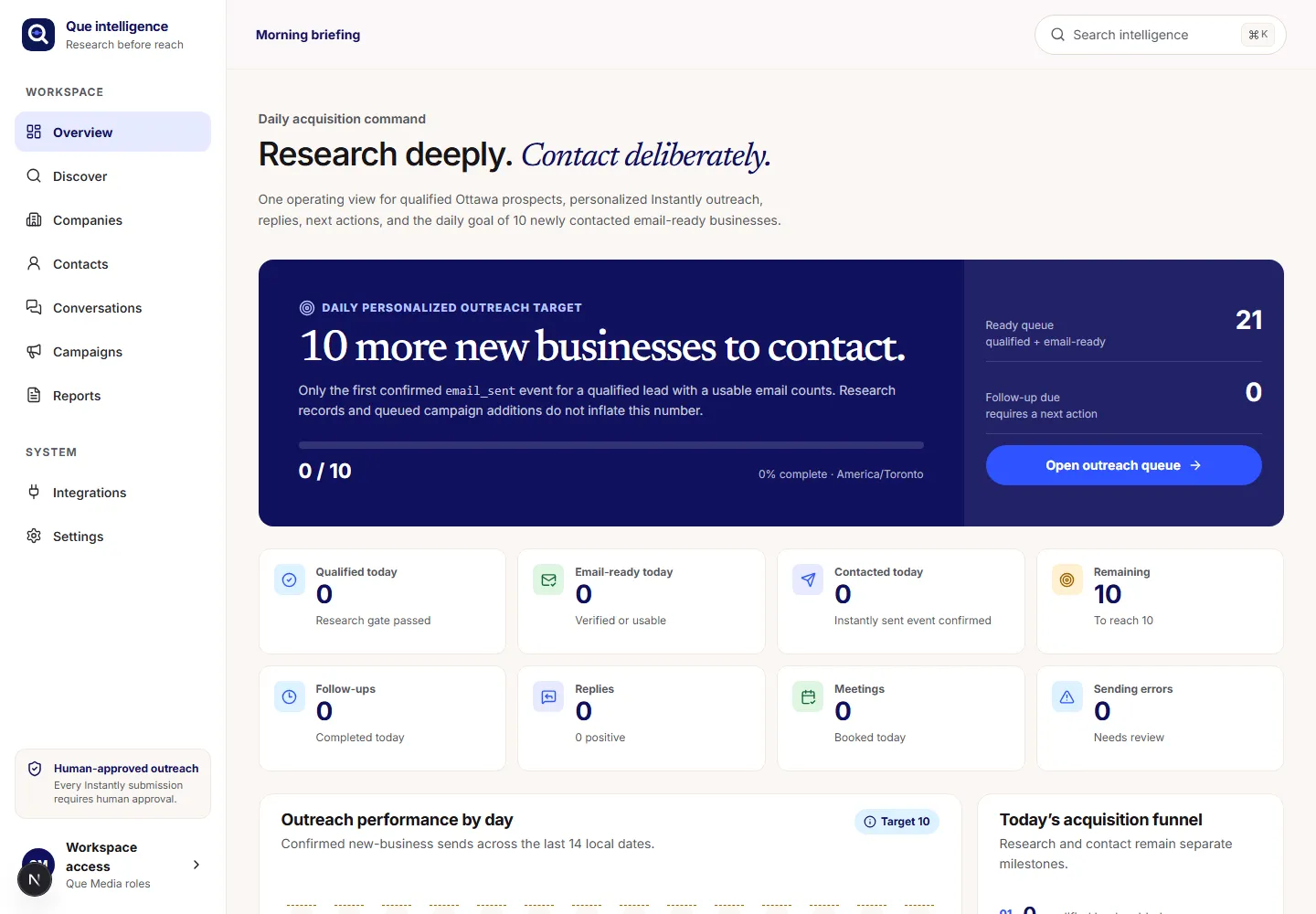
Centralizes Que Media's prospect research, outreach history, replies, follow-up, goals, and campaign learning in one operating view.
Why this system exists
A lead-level history answers the operational questions campaign totals cannot: who was contacted, what was said, what happened next, what needs attention, and which approach should change.
The current system centralizes prospect research, qualification, communication history, replies, follow-up, milestones, and campaign learning. It primarily supports targeted email outreach today. Advertising is planned, not implemented.
How the work moves
- Discover target
- Research with evidence
- Validate and qualify
- Prepare draft
- Review exact message
- Submit through approved channel
- Record reply and next action
- Learn across campaigns
What shaped the solution
Research and model output cannot bypass source, duplicate, scoring, and qualification rules.
Sending requires an authorized human to review the exact message and delivery context.
The current working tree contains active upgrades that are not assumed deployed.
Real lead and outreach data cannot appear in a public portfolio.
What I owned
Designed
Lead-level operating model, research schema, lifecycle, approval boundary, and learning views
Developed
Briefing, company records, contacts, conversations, campaigns, reports, search, and settings
Integrated
Instantly history, polling, webhooks, and approved submission workflow
Tested
Schema failures, duplicates, suppression, idempotency, auth, and isolated operations
Operated
Local workflow, data migration, runtime verification, and sync runbooks
Where AI fits
Model or agent role
Human or agent researchers can prepare prospect research, classification, qualification, prioritization, and drafts.
Structured contract
Research enters through one versioned JSON Schema with sources and trace metadata.
Deterministic safeguards
Source checks, duplicate resolution, deterministic scoring, contactability rules, suppressions, idempotency, role scopes, and audit history surround model-produced material.
Human decision
An authorized person reviews campaign, sender, recipient, subject, body, and evidence before submission. Research agents cannot send.
Decisions that carried the work
Centralize communication at the lead level
Campaign totals cannot explain the relationship with one prospect. Company, contact, message, reply, suppression, and next-action history stay attached to one operating record.
Treat model output as input, not authority
Research agents return schema-valid evidence and drafts. Deterministic validation, duplicate resolution, scoring, suppressions, and role checks decide what enters the workflow.
Keep the send boundary human
An authorized person reviews the campaign, sender, recipient, subject, body, and evidence. Opening a review does not contact anyone.
Verified outcome
Centralizes lead, contact, campaign, message, reply, suppression, and follow-up state.
Preserves one communication timeline around each company instead of isolated campaign snapshots.
Applies evidence, duplicate, contactability, and idempotency checks before outreach state changes.
Tracks progress only from confirmed provider events, not queued drafts.
What I will not overclaim
The live system contains private operational data and is not linked. Portfolio visuals use a separate SQLite database with fictional organizations and example.test contacts. Advertising, autonomous sales, and conversion outcomes are not claimed.
Verified from the current Q Intelligence repository, documentation, local isolated runtime, and synthetic capture scripts.